
Front-end development is evolving faster than ever, driven by new frameworks, AI-powered tools, and deeper integration between design and engineering. This article explores the biggest trend
Front-end development is evolving faster than ever, driven by new frameworks, AI-powered tools, and deeper integration between design and engineering. This article explores the biggest trend , including AI coding assistants, WebAssembly, edge rendering, and component-driven architectures,that will define how developers build websites and applications in the years ahead.
1. Introduction
Front-end development has always been shaped by rapid technological change. From the early days of jQuery to the rise of React, Vue, and Svelte, the field constantly reinvents itself. Looking ahead, new technologies and workflows are emerging that promise to change how developers design, build, and ship user interfaces.
Below are the key trends redefining the future of front-end development.
2. AI-Powered Development
AI will become a core part of the front-end workflow. Tools like GitHub Copilot, ChatGPT, and AI-based UI generators already accelerate coding, debugging, and even design.
Future impact:
- Automatic generation of UI components
- Real-time code optimization
- Intelligent accessibility suggestions
- Faster prototyping from simple text prompts
AI won’t replace developers—but it will drastically increase their speed and focus.
3. WebAssembly & High-Performance Web Apps
WebAssembly (Wasm) is enabling near-native performance in the browser. This means complex applications that once required desktop software can now run on the web.
Examples:
- 3D editors
- Video/audio processing
- Game engines
- Scientific tools
As languages like Rust and Go compile to Wasm more easily, front-end developers will build experiences that were previously impossible.
4. The Rise of Edge Rendering
Traditional server-side rendering is shifting towards edge computing, where content is rendered near the user.
Technologies driving this shift include:
- Vercel Edge Functions
- Cloudflare Workers
- Next.js App Router
Benefits:
- Faster load times
- Lower latency
- Better global performance
Future front-end apps will be distributed across global edge networks by default.
5. Component-Driven Architecture
Tools like React, Vue, Svelte, and Web Components have already popularized component-based development. But the next generation will take it further with:
- Universal component libraries
- Design systems integrated with AI
- Native browser support for advanced components
- Better server-side component rendering (React Server Components, Svelte 5 runes, Qwik resumability)
The separation between “design” and “code” will continue to shrink.
6. TypeScript as a Standard
TypeScript has already become the default for most serious projects. Moving forward, we can expect:
- Deeper integration in frameworks
- Frameworks written entirely in TypeScript
- Full-stack type safety with tools like tRPC and Bun
Type safety will be a baseline requirement, not just a preference.
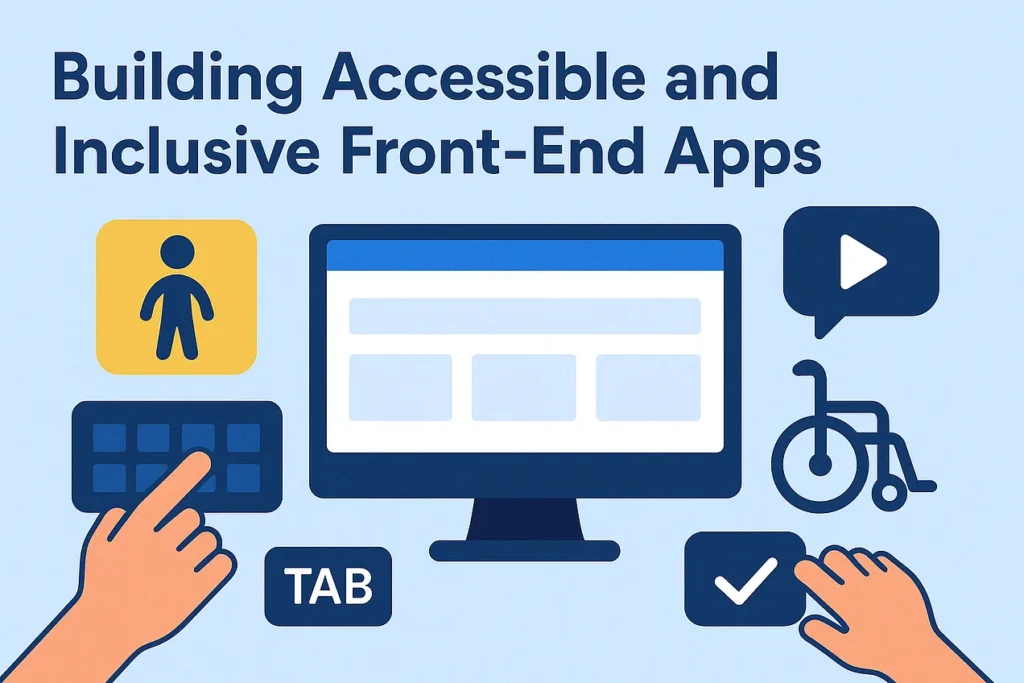
7. Accessibility & UX Automation
As legal pressure increases and user expectations grow, accessibility will become a top priority. AI and tooling will automate:
- ARIA suggestions
- Color contrast validation
- Screen reader optimization
- Motion-reduction and adaptive design features
Front-end developers will depend more on automated accessibility auditing.
8. The Future Developer: A Hybrid Engineer
Tomorrow’s front-end engineer will be part developer, part designer, and part architect. Skills that will become essential include:
- Understanding of Web Performance
- Basic UX/UI design
- Edge/cloud deployment
- AI-assisted workflows
- Cross-platform development (web, mobile, desktop via Electron/WASM)
The job becomes more strategic and less mechanical coding.
Conclusion
The future of front-end development is incredibly promising. With AI, WebAssembly, edge rendering, and component-driven architectures, the web will become more powerful, more interactive, and more intelligent. Front-end developers who embrace new tools, understand performance deeply, and adapt to AI as a collaborative partner will lead the next generation of digital experiences.
The future isn’t about choosing one framework,but about mastering the ecosystem around them.
#Frontend #WebDevelopment #JavaScript #NextJS #WebAssembly #AI #UIUX #TypeScript #FutureTech #Programmin
Awesome